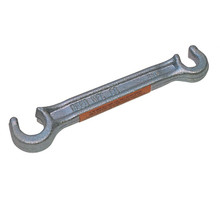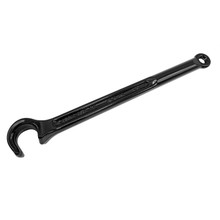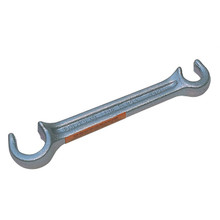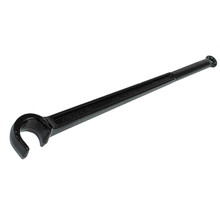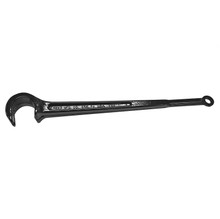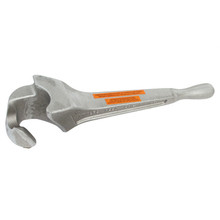

REED Valve Wheel Wrenches grip the rims of hand valve wheels securely and provide leverage for opening and closing. Valve wheel wrenches are the solution for handling hard-to-open valves. Choose a wrench based on the hook opening. The hooks work without gouging the wheel rim. OSHA inspectors can assess penalties for using a pipe wrench on a valve wheel rim as wrench teeth can leave sharp burrs on the wheel rim, which result in hand injuries.
Protect valve wheels from damage and burrs by choosing an appropriate hook.
Forged steel construction for strength and longevity.
Designed to apply torque needed for valve-turning, over long periods of time.
Plated to resist corrosion.
Reed designs are safer for heavy use—bending gives warning of overload.
REED Valve Wheel Wrenches grip the rims of hand valve wheels securely and provide leverage for opening and closing. Valve wheel wrenches are the solution for handling hard-to-open valves. Choose a wrench based on the hook opening. The hooks work without gouging the wheel rim. OSHA inspectors can assess penalties for using a pipe wrench on a valve wheel rim as wrench teeth can leave sharp burrs on the wheel rim, which result in hand injuries.
Protect valve wheels from damage and burrs by choosing an appropriate hook.
Forged steel construction for strength and longevity.
Designed to apply torque needed for valve-turning, over long periods of time.
Powder epoxy paint durable and helps to resist corrosion.
Reed designs are safer for heavy use—bending gives warning of overload.
REED Valve Wheel Wrenches grip the rims of hand valve wheels securely and provide leverage for opening and closing. Valve wheel wrenches are the solution for handling hard-to-open valves. Choose a wrench based on the hook opening. The hooks work without gouging the wheel rim. OSHA inspectors can assess penalties for using a pipe wrench on a valve wheel rim as wrench teeth can leave sharp burrs on the wheel rim, which result in hand injuries.
Protect valve wheels from damage and burrs by choosing an appropriate hook.
Forged steel construction for strength and longevity.
Designed to apply torque needed for valve-turning, over long periods of time.
Plated to resist corrosion.
Reed designs are safer for heavy use—bending gives warning of overload.
REED Valve Wheel Wrenches grip the rims of hand valve wheels securely and provide leverage for opening and closing. Valve wheel wrenches are the solution for handling hard-to-open valves. Choose a wrench based on the hook opening. The hooks work without gouging the wheel rim. OSHA inspectors can assess penalties for using a pipe wrench on a valve wheel rim as wrench teeth can leave sharp burrs on the wheel rim, which result in hand injuries.
Protect valve wheels from damage and burrs by choosing an appropriate hook.
Forged steel construction for strength and longevity.
Designed to apply torque needed for valve-turning, over long periods of time.
Powder epoxy paint durable and helps to resist corrosion.
Reed designs are safer for heavy use—bending gives warning of overload.
REED Valve Wheel Wrenches grip the rims of hand valve wheels securely and provide leverage for opening and closing. Valve wheel wrenches are the solution for handling hard-to-open valves. Choose a wrench based on the hook opening. The hooks work without gouging the wheel rim. OSHA inspectors can assess penalties for using a pipe wrench on a valve wheel rim as wrench teeth can leave sharp burrs on the wheel rim, which result in hand injuries.
Protect valve wheels from damage and burrs by choosing an appropriate hook.
Forged steel construction for strength and longevity.
Designed to apply torque needed for valve-turning, over long periods of time.
Powder epoxy paint durable and helps to resist corrosion.
Reed designs are safer for heavy use—bending gives warning of overload.
REED Valve Wheel Wrenches grip the rims of hand valve wheels securely and provide leverage for opening and closing. Valve wheel wrenches are the solution for handling hard-to-open valves. Choose a wrench based on the hook opening. The hooks work without gouging the wheel rim. OSHA inspectors can assess penalties for using a pipe wrench on a valve wheel rim as wrench teeth can leave sharp burrs on the wheel rim, which result in hand injuries.
Protect valve wheels from damage and burrs by choosing an appropriate hook.
VWALP1 and VWALP2 are made of low sparking aluminum.
Designed to apply torque needed for valve-turning, over long periods of time.
Reed designs are safer for heavy use—bending gives warning of overload.
REED Valve Wheel Wrenches grip the rims of hand valve wheels securely and provide leverage for opening and closing. Valve wheel wrenches are the solution for handling hard-to-open valves. Choose a wrench based on the hook opening. The hooks work without gouging the wheel rim. OSHA inspectors can assess penalties for using a pipe wrench on a valve wheel rim as wrench teeth can leave sharp burrs on the wheel rim, which result in hand injuries.
Protect valve wheels from damage and burrs by choosing an appropriate hook.
VWALP1 and VWALP2 are made of low sparking aluminum.
Designed to apply torque needed for valve-turning, over long periods of time.
Reed designs are safer for heavy use—bending gives warning of overload.
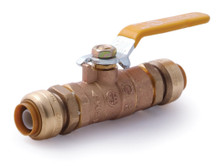
SharkBite is the Push-Fit connection system that is really taking hold. It’s the easiest way to join copper, CPVC, or PEX pipe in any combination with no soldering, clamps, unions, or glue.
PREPARATION The following instructions must be followed to assemble the SharkBite Connection System.
Select the correct size fitting and tubing for the job. Check that fittings and tubing are clean, in good condition and are free from damage and foreign objects.
Cut the tube so that the ends are square. Ensure that there are no burrs or damage to the cut end.
Wherever possible proper tube cutting tools such as rotary tube cutters (copper tubing) or tube shears (for plastic tubing) should be used.
Once the tubing end is cut square and clean, use the SharkBite Depth Deburr Gage (sold separately) and a permanent marker to mark the insert depth on the outside of the tubing. This mark is used to ensure that the joint is assembled correctly.
To assemble correctly, the tubing needs to be pushed into the fitting until it meets the tube stop. Follow these three steps to insert the tubing into the fitting.
1. Insert the tube through the release collar to rest against the grab ring.
2. Push the tube firmly with a slight twisting action until it reaches the tube stop.
3. To ensure that the tube is correctly inserted, check that the depth mark is within 0.005 in (0.13 mm) of the end of the release collar.Just insert the pipe and the stainless steel teeth bite down and grip tight, while a specially formulated O-ring compresses to create a perfect seal.
Disassembly is just as fast using the simple disconnect tool so fittings and valves can be easily changed and reused.
They can even be rotated after assembly for easier installation in tight spaces.
Get SharkBite and get a grip on your next plumbing project.
SharkBite is the Push-Fit connection system that is really taking hold. It’s the easiest way to join copper, CPVC, or PEX pipe in any combination with no soldering, clamps, unions, or glue.
PREPARATION The following instructions must be followed to assemble the SharkBite Connection System.
Select the correct size fitting and tubing for the job. Check that fittings and tubing are clean, in good condition and are free from damage and foreign objects.
Cut the tube so that the ends are square. Ensure that there are no burrs or damage to the cut end.
Wherever possible proper tube cutting tools such as rotary tube cutters (copper tubing) or tube shears (for plastic tubing) should be used.
Once the tubing end is cut square and clean, use the SharkBite Depth Deburr Gage (sold separately) and a permanent marker to mark the insert depth on the outside of the tubing. This mark is used to ensure that the joint is assembled correctly.
To assemble correctly, the tubing needs to be pushed into the fitting until it meets the tube stop. Follow these three steps to insert the tubing into the fitting.
1. Insert the tube through the release collar to rest against the grab ring.
2. Push the tube firmly with a slight twisting action until it reaches the tube stop.
3. To ensure that the tube is correctly inserted, check that the depth mark is within 0.005 in (0.13 mm) of the end of the release collar.Just insert the pipe and the stainless steel teeth bite down and grip tight, while a specially formulated O-ring compresses to create a perfect seal.
Disassembly is just as fast using the simple disconnect tool so fittings and valves can be easily changed and reused.
They can even be rotated after assembly for easier installation in tight spaces.
Get SharkBite and get a grip on your next plumbing project.